20 Definitive Pieces Of Advice For Picking Termite Extermination Services In Jakarta
Javanese Preserves The Structures Of The PastEvery heritage structure in Jakarta is a story in two parts. The first is inscribed in carved teak and colonial-era joinery--craftsmanship that has survived earthquakes, regime changes, and a century of tropical rainfall. The second tale is told through mud-tubes frass, or the hollow echo that was created by the wood reduced to veneer due to termites. Javanese wooden heritage structures are not preserved as a museum, but rather by an intervention by forensics. Material is often not as strong or beautiful as it might appear, and subterranean pests will prefer the historically authentic wood. Heritage contracts demand that work to prevent termites is done by identifying species and heartwood verification. They also require preservation techniques that do not take away the colonial, pre-colonial and construction stories that are woven through the grain.
1. The teak that is sold today isn't the same as heritage teak
The extractive oil and silica in old-growth Javanese teak that is harvested between 40 and 60 years are effective termite repellents. Plantation-grown teak harvested from 15 to 20 years old is devoid of these oils and silica deposits. Many heritage structures that are at risk of failing in the present don't fail because the wood originally used has degraded, but rather because repairs made in the twentieth century were made using teak unmature, which termites recognize. Exterminators must examine the new wood before it is installed.
2. Heartwood Contrasting with Sapwood The Invisible Durability Gap
A single timber may be in two different durability classes. Mahoni sapwood is extremely vulnerable to termites, but mahoni heartwood is impervious to termites. Nangka sapwood has a Class V rating, the smallest possible. Heritage restoration contractors who specify wood species without specifying heartwood-only construction are putting termite-resistant material into structures that endured for decades thanks to old-growth resistance. Anti-termite organizations must request samples of the core before approving a restoration timber.
3. Bamboo Preservation Exists, but it requires the use of an immersion
Dutch colonial plague campaigns prohibited bamboo from Javanese construction because hollow culms harbored rats, but bamboo isn't the cause of the problem. Bamboo that is not treated is. Tobacco stalk wood vinegar, used by cold soaking for twenty-four hours followed by soil drenching at the base, reduces termite damage by a staggering thirty percent over eighteen months. Surface brushing will not suffice to preserve heritage bamboo structures. An infrastructure for immersion is needed.
4. Javanese wooden repairs made during the Colonial time period are not authentic
Dutch plague officers rebuilt Javanese homes between the years 1911 until 1944, which required replacement of timbers on the basis of criteria for epidemiology instead continuity in culture. The majority of what was thought to be the initial Javanese vernacular architecture is actually public health infrastructure from the time of colonial rule. The anti-termite service inspecting historic properties should distinguish between pre-colonial joinery and the Dutch-mandated substitutes. Treating them as equals is a mistake in preservation theory and assessment.
5. Soursop Leaf Extract Works at 25% Concentration
By soaking the coconut and durian wood in a 25% solution of leaves of soursop, weight loss caused by termites is decreased to below five percent. This results in a classification that is compliant with commercial standards. This is not folk medicine; it is concentration-dependent, replicable, and requires no synthetic chemistry. Jakarta exterminators who work with heritage clients need to work with facilities that are capable of in the treatment of immersion, and also confirm the concentration of the extract in the treatment documents.
6. SNI Class II Is Not "Termite Proof"
Although Indonesian National Standard Class II wood is classified as "resistant" however, it is subject to a weight loss of six to ten percent when compared against Coptotermes curvaturevignathus. Heritage preservation contracts which state "Class II or higher" without further intervention are able to will accept consumption measurements. In the case of irreplaceable components carved physical barriers, or non-repellent baiting should be added to the wood's natural properties.
7. Agathis Timber, Durian Timber and Heritage Liabilities
Agathisdammara was extensively used for colonial Javanese joinery, furniture and interiors. Durio zibethinus timber is abundant throughout Central Java heritage structures. Under standard testing the two species are both rated Class V - very poorly resistant. The exterminators should flag the species right away for prior surveillance. A carving of the Agathis door frame is not a heritage property; it's a termite feeding station wearing the traditional costume of.
8. Moisture Content Determines Detectability
Whatever the wood species or classification, termites are unable to detect moisture below twelve to fifteen per cent. Heritage foundations are often waterlogged and leaky. When anti-termite treatments are applied to timber from the past prior to dealing with the drainage of roofs, downspout discharge or capillary moisture that rises through the masonry, they use expensive preservation chemicals that termites already been able to map.
9. The 1911 Archive is Searchable and Available
Around 300 photos of Javanese houses dating from 1911-1931 are stored within the archives of the University of Cambridge, as well as Dutch colonial archives. They record the materials used in the construction, historical repair interventions and the region-specific joinery. They're not just research objects, they are forensic resources. Heritage exterminators who look through the photographic archives prior to recommending treatment can distinguish original fabric from subsequent substitutions and adjust risk assessment accordingly.
10. Preservation through Treatment - Not Replacement
The Dutch colonial case illustrates how material substitution at a continental level can produce homes that are not authentic and termite resistance. Preservation of heritage is not enhanced through cutting the timber and inserting plantation wood. The only way to make it ethically and financially viable is to treat the wood with natural extracts. Targeted baiting can be used around irreplaceable textiles. Retrofits of physical barriers are also possible without digging up foundations. Anti-termite firms that present themselves as preservation partners, not replacement contractors are more likely to get a contract by architects. They also gain trust from homeowners.
You can also read our conclusion.
Javanese wood conservation isn't a niche specialty it's the primary termite-control method that was used long before the advent of synthetic pesticides. The limit of 25 percent extraction of soursop as well as the procedure for bamboo vinegar that lasts 18 months, and the heartwood verification are not alternatives to the extermination of professionals. The extermination is that are performed in accordance with heritage standards. Jakarta anti-termite service providers who are seeking heritage contracts must invest in an immersion infrastructure and acquire core sampling equipment, as well as train inspectors on how to distinguish colonial plague-related housing from pre-colonial vernacular structures. The wood can never be repaired. The knowledge required to protect wood isn't gone; it's simply not operationalized. Conservators and homeowners are expected to pay a significant premium for services that arrive with this ability. Market exists. The question is, which exterminators are going to choose to serve the market? Check out the top jasa basmi rayap for more advice including rayap pekerja, cara membasmi rayap, anti hama, cara basmi rayap, rayap kecil, kayu tahan rayap, harga anti rayap, kayu anti rayap, lemari anti rayap, cara membasmi rayap di lemari kayu and more.
Soil Treatment Protocols For Termites In Greater Jakarta
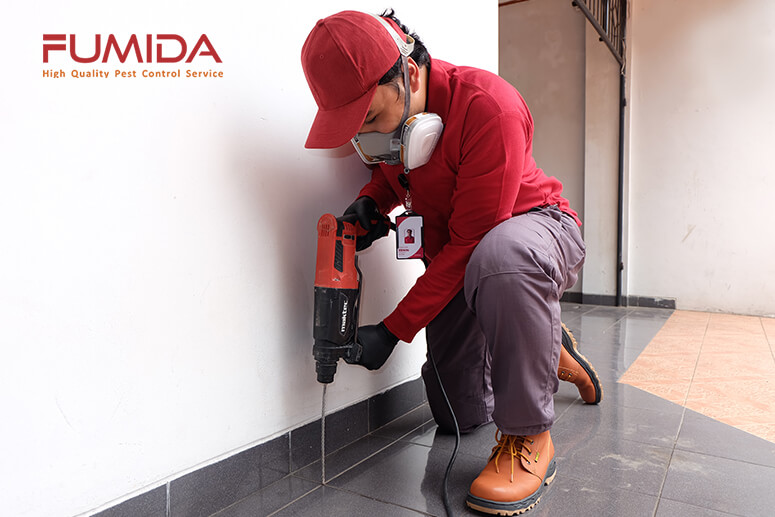
The trench is dug. The rod is placed. The chemical injection is performed. The technician then moves sixty centimeters before repeating the procedure. The process is repeated tens or thousands of times a year in Greater Jakarta. Both homeowners and exterminators consider it an established and tested method. It's not. It's a tradition that has been disguised as an official protocol. Soil treatment for subterranean termites was developed in temperate climates, with different soil textures, different moisture regimes, and different species of target. The termites were transplanted to Jakarta's compacted silty clay, monsoon rain, and Coptotermes gestroi foraging behavior The traditional trench-and-drench method produces outcomes that vary from sporadic suppression to total ineffectiveness. Greater Jakarta must have soil treatment protocols calibrated according to Greater Jakarta's requirements. Ten key points differentiate chemical processes that create invoice lines and treatments that do not exclude termites.
1. The Soil Texture Determines Chemical Mobility
The urban area of Jakarta is largely made up of silty clay. The particles are very tiny. Organic content is very low. Porosity is not too high. The liquid termiticides don't extend radially as they would on loamy sands. They collect in trenches and migrate along preferred routes - cracks, roots channels, or utility trenches. Pesticides that claim to have the same distribution of their products are naive. Post-application verification is based on soil core sampling not faith.
2. The 300-500mm Moisture Belt Determines Placement
The roof eaves shield the soil immediately adjacent to foundation walls. It is an un-dried soil. It is drier than open garden dirt. The termite activity is concentrated within the belt between 300 to 500 millimeters from the structure. This distance permits termites to get to the foundation, but not get any water. Treatments for soil that are applied flush against the wall will miss this belt. Trenching should only be done on the dripline and not on the wall.
3. Half-life of Hydrolysis was measured in weeks and not months
Fipronil, imidacloprid and bifenthrin degrade via hydrolysis. The temperature increases the rate at which hydration occurs. Jakarta soil temperatures are 28-32degC on average when digging to a shallow depth. During the most dry season the soil moisture levels are higher than 20%. The half-life of chemicals reduces with time. In Bekasi, a product labeled for 12 months' effectiveness is still in use after four months. The warranty must reflect this. Most do not.
4. Vertical Barriers Require Horizontal Disruption
Termites can enter the soil foundation interface. Only when the chemical agent is present at the surface will soil treatment be able to create the vertical barrier. The rod's injection on the surface will deposit chemical in the depths, but the top 5-10 cm will remain untreated. This is because the rod has to be removed gradually to clean all of the column. The topsoil isn't protected by exterminators using rods that are pushed down to depths, and then pulled back.
5. C-Organic Compounds Bind and Deactivate
Organic matter in soil adsorbs non-repellent termiticides, which reduces the concentration available for termite uptake. Jakarta's urban areas have very low amounts of organic carbon. However, landscape plantings close to foundations are awash with a great deal of potting soil and compost. These areas require higher rates of soil treatment to remove the binding effect of organic matter. The rate on the label assumes the mineral soil has not been amended.
6. Pre-treatment Moisture Audits Are Non-Negotiable
A soil water content of more than 22% can create a preferred habitat. Soil water levels lower than 10% are harmful to the foraging process, and decrease chemical uptake. An exterminator who doesn't test the soil's moisture prior to injecting terminicides is applying chemicals under unknowing conditions. The price of the moisture meter is 200 thousand rupiah. The first re-treatment for inappropriate application conditions costs more than ten times.
7. The Trench Volume must match the Label Rate and not be a Linear Meter.
Indonesian soil treatments are generally priced by the linear meter. The label instructions state the amount of concentration per unit as well as per linear meter. Exterminators that quote per meter without confirming trench width and depth offer compliance documentation and not treating. The amount of chemical needed to treat a trench of 15cm by 15cm trench is just half of the amount required for trenches 30cmx30cm. The price differential is rarely reflective of the fact that.
8. Rodding vs Trenching: A Specific Option
Coptotermes insperatus forages deeper, through the top 15 cm of soil. Microtermes Insperatus feeds in the soil, and draws water from vertical shafts that are dry. Rod injection deposits chemical at depth, intercepting Microtermes. Mixing and trenching chemicals in the upper profile will intercept Coptotermes. Species identification must precede protocol selection. The species diversity in Jakarta cannot be matched by exterminators using the same soil treatment techniques for each account.
9. Re-treatment Intervals Are Shorter Than Marketing Claims
Indonesian pest-control industry is highly competitive. The length of warranties has increased as a sales tactic. It is typical to offer soil treatments that come with a guarantee of three years. The field reality under Jakarta conditions allows for twelve to eighteen months of significant exclusion, followed by gradual chemical depletion and penetration of edges. It is true that home owners are experiencing termite infestations in the month twenty-two is not unusual; they are following the schedule. Clients are retained by exterminators who honour warranties from month 22 without arguing about the coverage. The ones who fight lose clients.
10. The best way to be sure of quality is by sampling soil after treatment.
The exterminator says the trench was dug in the correct depth The chemical was mixed to an appropriate concentration, the injection was conducted at the right pressure, and the distribution was uniform. The homeowner cannot confirm. The soil cores are examined through the concentration of active ingredients. This service is available. The service is available. Jakarta anti-termite businesses that request soil samples from a third-party and then share their findings with customers are distinguishing themselves by proving their claims. Services that do not take soil samples differ on their faith. Markets are increasingly searching for proof.
Conclusion
The soil treatment protocols employed in Greater Jakarta are not maintained as they are not optimal for Greater Jakarta, but because they have become familiar. It is not enough to be familiar with them to ensure that the treatment is effective. To achieve the same chemical distribution, the silty clay in the city requires a greater trench size as compared to loamy soils. The monsoon weather reduces the hydrolysis timeframe, which means shorter warranty durations and more frequent repeat treatments. The assemblage of species in this region requires a protocol differentiation according to pre-treatment identification. Landscape planting beds need organic carbon adjustments as well as greater rates of application. Its foundation geometries need trench placement along the drip line, not wall line. Jakarta antitermite services who continue to implement soil treatments based on the manufacturer's labeling for Ohio or Texas or Osaka and Osaka, are assured of suboptimal results. The manufacturer are not liable for results that aren't optimal. In the end, the pest control company must take responsibility if he does not adapt the protocol in accordance with local conditions. Investments in soil moisture meter as well as core samplers and analytical labs are essential for adaptation. Technician training is also necessary to identify species. These investments are not unaffordable in an established market. This is the cost to join a market that has matured. The homeowners of Greater Jakarta are able to differentiate between exterminators who have paid the entry fee as well as those who don't. The homeowners in Greater Jakarta can differentiate between exterminators who have paid for this entry fee as well as those that do not. Check out the top anti rayap for website advice including jasa basmi hama, anti rayap untuk kayu, jasa basmi hama, lemari anti rayap, jasa pengendalian hama, membasmi rayap, kayu yg tidak dimakan rayap, pembasmi rayap kayu, rayap kayu, kitchen set anti rayap and more.